A soaker hose for your foundation is a porous garden hose laid in the soil a short way out from the slab, run slowly during dry spells so the clay under the edge of the house stays evenly moist. In Houston that matters, because the local clay can shrink and crack open in a drought, and a slab edge that dries out can drop. A hose costs little and helps prevent that movement. It does not lift a house that has already moved. This page covers how the hose works, where to lay it, how long to run it, which one to buy and when you need a foundation visit instead.
What is a soaker hose, and is it different from a drip hose?
A soaker hose is made of porous material, usually recycled rubber or PVC, that seeps water out along its whole length instead of spraying it. A drip hose, or drip line, is plastic tubing with small holes called emitters spaced along it, each releasing water at a set rate. Both deliver water slowly into the soil. The soaker hose is cheaper and simpler; the drip line is more even and easier to control.
The difference shows on longer runs. University of Georgia Extension advice says soaker hoses don't perform well beyond about 100 feet or running uphill, while pressure-compensating drip emitters stay steady.
| Soaker hose | Drip line | |
|---|---|---|
| How water leaves | Seeps along the whole length | Drips from emitters at set spacing |
| Typical lengths sold | 25 to 100 feet | Cut to length from a roll |
| Evenness on long or sloped runs | Poor past about 100 feet | Steady with pressure-compensating emitters |
| Cost and setup | Cheapest, connect to a faucet | More parts: filter, regulator, fittings |
| Best for | A single side or a smaller house | A full perimeter, or a system on a timer |
If you want a permanent setup, a foundation watering system and what it costs explains the drip option in detail.
Are soaker hoses good for a Houston foundation?
Yes, as prevention. Most Houston houses sit on a concrete slab poured on clay, and that clay moves with moisture. The USDA describes the Lake Charles clay found across the area as 45 to 60% clay that cracks half an inch to two inches wide and a foot or more deep when dry. Keeping the soil at the slab edge evenly moist limits that shrink and swell, and a soaker hose is the cheapest way to do it.
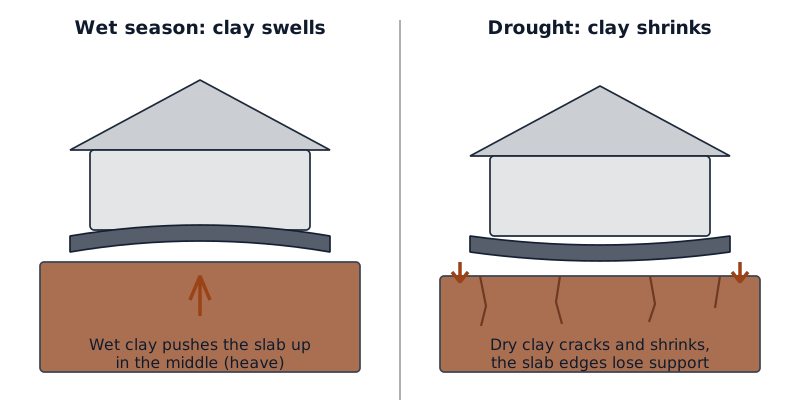
The USDA also notes that water enters this clay rapidly when cracked and very slowly once wet, so slow, steady watering beats flooding the bed. The Lake Charles series takes its name from a type location in Fort Bend County, so it's the soil under many homes in Sugar Land and the southwest side.
A hose helps the soil. It doesn't fix a slab that has already settled or tilted; that needs a slab foundation repair assessment. Older pier-and-beam houses, such as many in the Houston Heights, have perimeter piers in the same clay, so even moisture helps them too.
What is the best way to water your foundation?
The best way is slow, even water in a ring around the whole house, a few inches below the surface or under mulch, never aimed directly at the slab. A soaker hose or drip line on a timer does this well. A Texas A&M AgriLife water conservation specialist has advised setting the line at least 8 inches from the foundation, letting it drip slowly, and checking the soil so you don't overwater.
A few practical points for a Houston yard:
- Go around the full perimeter. One dry side is how a slab tilts. Use two shorter runs rather than one long one.
- Lay it in the soil or under mulch. Garden pegs hold it in place. On the surface, sun and mowers shorten its life.
- Don't fill cracks with a running hose. If the ground has opened up, let slow watering close it over several days.
- Check the soil. A moisture meter or a trowel tells you more than the calendar. You want it damp, not muddy.
Step-by-step layout, fittings and depth are covered in how to install a soaker hose for your foundation.
How long do you run a soaker hose for foundation?
There's no single right number, because hoses leak at different rates and soil dries at different speeds. Start by measuring your hose: Extension advice is to run it into a bucket for one hour and measure what comes out. Then run it in the yard for about 30 minutes and check that the soil is moist about 2 inches deep and an inch or so either side of the hose. Adjust from there.
In a Houston summer you may water every few days in a dry spell, and not at all in a wet month. Short runs with time to soak in suit clay better than one long run, and night watering loses less to evaporation.
What are the disadvantages of using a soaker hose?
The main drawbacks are uneven flow, a short life and the risk of overwatering. Soaker hoses water poorly on long runs and slopes, the far ends often stay drier than the faucet end, and rubber hoses crack in the sun. Extension advice notes that most work best at about 60 psi and may burst at 100 psi or more, so a pressure regulator helps. A timer left on with a leaking fitting wastes water quietly.
Other limits worth knowing:
- They clog and wear. Flush the hose each season, and replace worn washers and hose ends before a leak floods one corner.
- They don't stop trees. A large tree near the house can pull moisture from the clay faster than a hose replaces it. A foundation root barrier deals with the roots.
Which soaker hose is best for a foundation?
The best soaker hose for a foundation is one long enough to reach without exceeding about 100 feet per run, made of heavy-duty rubber or a thick-walled material that resists sun, with solid metal end fittings. A flat hose suits straight runs along a wall. A round hose bends around corners and beds. Add a pressure regulator, a backflow preventer at the faucet and a simple timer.
At Home Depot and other stores you'll find single hoses and foundation watering kits. Check what's included: a kit with a regulator, timer, connectors and end caps saves trips. Run the bucket test on whatever you buy, since stated outputs vary.
When does a foundation need more than a soaker hose?
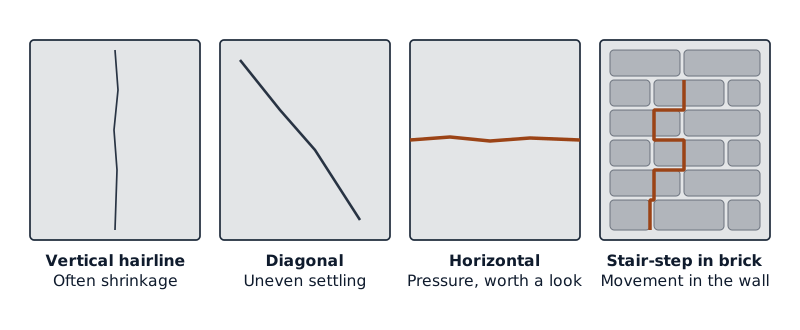
When the house has already moved. Watering keeps healthy soil stable, but it won't close a crack wider than a pencil, bring a sunken corner back up or level a floor. Signs such as stair-step cracks in brick, doors that stick in one season and swing free in another, gaps at window frames or a floor you can feel slope mean it's time for a foundation inspection.
A local foundation contractor checks the floor level, the cracks and the drainage, and tells you whether the movement is seasonal or ongoing. In Houston an inspection averages about $600, with a typical range of $300 to $1,000, according to a 2026 Houston Press guide. Foundation inspection costs explains what changes that figure. If repairs are needed, you get a written quote before any work starts.
Ask for a visit through the quote form and we'll arrange for a local foundation contractor to come to you.
Questions people ask
How long to soaker hose trees?
Water trees slowly and deeply, out at the drip line under the edge of the canopy, not against the trunk. Run the hose long enough that the soil is moist several inches down, which you can check with a trowel or probe, then let it dry a little before the next watering. Measure your hose's hourly output first so you know how much each run delivers. Deep, less frequent watering encourages deeper roots.
Can I leave a soaker hose on all the time?
No. A hose running nonstop saturates the clay, can wash out soil along the slab and causes swelling that moves the foundation as much as drying does. It also wastes water, and the City of Houston may restrict watering in a drought. Put it on a timer, water in brief sessions with time to soak in, and check the soil before each week's schedule. Turn it off entirely during wet spells.
Should a soaker hose be buried?
Covering it is better than leaving it bare. Most homeowners lay the hose a few inches deep in the bed or under a layer of mulch, a short way out from the slab. That cuts evaporation, protects the hose from sun and mowers, and puts water where the clay is. Keep the faucet end and connections reachable so you can check for leaks and flush the line.
Will watering my foundation fix existing cracks?
No. Even watering can stop seasonal gaps from widening and may let small soil cracks close, but it won't repair cracked concrete or lift a slab that has settled. Hairline cracks that don't change may only need sealing; wider or growing ones need a look. The soaker hose for foundation watering guide covers the season-by-season routine once a house is stable.
Read on
- Foundation root barrier
When a tree root barrier protects a Houston slab on clay, how deep and how far out it goes, what a kit can and can't do, and when to ask…
- Costs
What a foundation watering system costs in Houston in 2026, from a $30 soaker hose to an installed drip line on a timer, and what moves…
- Foundation watering and trees
Step-by-step: lay a soaker hose around a Houston slab, what parts to buy, how far out it goes, how to set the timer, and when a foundation…
See Foundation Repairs Houston Quotes foundation repair for the other services and what they cost.
Sources
- USDA NRCS, Lake Charles soil series description
- University of Georgia Extension, Fulton County, flower bed irrigation using a soaker hose system (2025)
- Saving Water Partnership, drip irrigation and soaker hoses
- CBS News Texas, Texas A&M AgriLife water conservation specialist on foundation watering (2015)
- Houston Press, guide to foundation repair in Houston (2026)
Last changed