A vertical foundation crack is usually the milder of the two. Thin vertical cracks often come from concrete shrinking as it cures or from small, even settling. Horizontal cracks are the ones to take seriously, because they tend to mean soil or water pressure is pushing sideways on a wall. Direction is only a first clue, though. Width, growth, water and an offset between the two sides tell you more. This page compares the two on Houston homes, most of which sit on a slab or on piers rather than a basement, and shows when a foundation crack repair visit is worth booking.
What is the difference between vertical and horizontal foundation cracks?
Vertical cracks run straight up and down, or close to it, and are usually even in width. They most often come from concrete shrinkage or minor settling and are rarely structural on their own. Horizontal cracks run side to side along a wall. National guidance links them to soil pressure, from swelling soil or trapped water, pushing the wall inward. That makes horizontal cracks the more serious of the two in most cases.
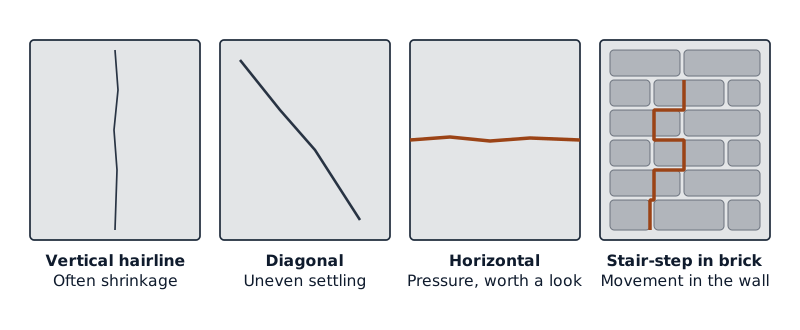
| Vertical cracks | Horizontal cracks | |
|---|---|---|
| Direction | Up and down, sometimes slightly angled | Side to side along the wall |
| Usual cause | Concrete shrinking as it cures, small even settling | Sideways pressure from wet or swelling soil |
| How serious, usually | Low, if thin and not growing | Higher, especially with bowing |
| Water | Can seep in if left open | Often leaks, since it sits where pressure builds |
| Typical first step | Mark it, watch it, seal it | Have a professional look at it |
| Typical repair | Crack filling, about $250 to $800 | Depends on the cause; drainage, bracing or piers |
Diagonal cracks sit between the two. They usually form when one part of the foundation settles more than another, and they are often wider at one end. On brick, the same movement shows up as a stair-step line through the mortar, covered on stair-step foundation cracks.
Are vertical cracks in a foundation bad?
Most vertical cracks are not bad on their own. Hairline vertical cracks form as concrete shrinks while it cures, and they often appear within the first couple of years after a pour. A vertical crack becomes a concern when it widens, lengthens, lets in moisture, or when one side sits higher than the other. National guidance treats a crack wider than about 1/4 inch as a possible structural sign.
So the question is less "which way does it run" and more "is it changing". A thin vertical crack that looks the same after a year of Houston wet and dry seasons is usually cosmetic. One that opens in late summer and closes in winter is telling you the soil under the slab is moving.
Watch for these alongside a vertical crack:
- Doors that start sticking or swinging on their own
- Floors that slope or feel springy
- Gaps opening at window trim, baseboards or where walls meet the ceiling
- A crack you can catch a fingernail on, where one edge stands proud of the other
What do horizontal cracks in walls mean?
Horizontal cracks in a foundation wall usually mean something is pushing on it from the side. When soil gets soaked it swells and presses against the wall, and that pressure can crack it along its length, bow it inward and let water through. The crack tends to get worse until the cause, often poor grading, clogged gutters or downspouts emptying beside the house, is fixed.
Most advice about horizontal cracks is written for basement walls, which hold back soil on one side. Houston houses almost never have a basement. Most homes built since the 1960s sit on a concrete slab, and older ones sit on pier and beam. Here a horizontal crack is more likely to turn up in a few other places:
- The exposed edge of a slab or its perimeter beam. Have a professional check any crack along the edge where it is wider at one end or where pieces have broken away.
- Brick veneer. A horizontal crack running along a mortar line can follow the slab moving underneath it.
- Interior drywall. Long horizontal cracks partway up a wall often follow a frame that has shifted as the foundation moved.
- Retaining walls and block skirting on raised houses. These hold back soil, so they behave more like a basement wall.
A hairline horizontal crack in a foundation that is not growing may be minor. Measure it, date it and photograph it. If it widens, or the wall bows, have it checked.
Why does Houston clay make cracks in both directions?
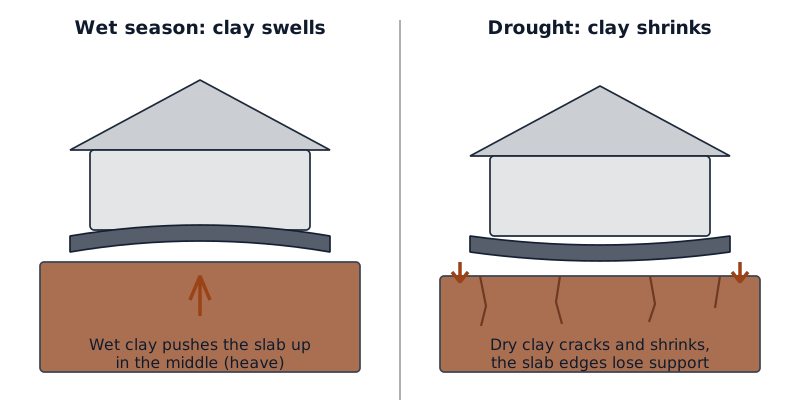
Houston clay swells when wet and shrinks when dry, and that movement cracks foundations in every direction. The USDA describes the Lake Charles clay found across much of the area as 45 to 60% clay. In dry spells it cracks open 1/2 inch to 2 inches wide and a foot or more deep, and those cracks stay open 60 to 90 days in most years.
East of the Trinity River, the Beaumont clay behaves much the same way. When the ground dries, the slab edge drops. When rain returns, water runs into the open soil cracks fast, and the clay swells and pushes back. The pressure is uneven around the house, so the slab bends. That bending is what opens vertical cracks in brick, diagonal cracks at door corners and horizontal cracks along walls.
Land subsidence adds slow, wide-area movement on top. The USGS measured more than 10 feet of sinking near Pasadena between 1906 and 1995. Keeping soil moisture steady with good foundation drainage and, in drought, a soaker hose along the foundation cuts down the swing.
How do you tell settling cracks from foundation problems?
Settling cracks are thin, stable and usually vertical or slightly diagonal. Foundation problems show movement: cracks that keep growing, edges out of line, and other signs such as sloping floors and sticking doors at the same time. A single hairline crack that has not changed for years is generally settling. Several new cracks in different rooms within a few months point to a foundation that is still moving.
| Sign | More likely settling | More likely a foundation problem |
|---|---|---|
| Width | Hairline | Over about 1/4 inch, or widening |
| Change over time | Stable for a year or more | Getting longer or wider |
| Edges | Flush on both sides | One side higher or pushed out |
| Pattern | One or two cracks | Many cracks, or the same crack inside and out |
| Other signs | None | Doors sticking, floors sloping, gaps at trim |
The quick check works like this. Pencil a line across each end of the crack, write the date beside it and photograph it with a coin or tape for scale. Look again each month for a season. If the crack runs past your mark, it is active. The page on foundation settling explains the slower, normal kind of movement in more detail.
What do vertical and horizontal crack repairs cost?
A thin crack that only needs filling costs about $250 to $800, according to This Old House. Cracks caused by a moving foundation cost more, because the fix is the movement, not the crack. Most Houston foundation repair jobs run $3,300 to $6,800, with each pressed concrete pier about $300 to $600, says a 2026 Houston Press guide.
| Repair | Typical range | Source |
|---|---|---|
| Crack filling | $250 to $800 | National guide, 2026 |
| Foundation inspection | $300 to $1,000 | Houston guide, 2026 |
| Structural engineer report | $500 to $1,000 | National guide, 2026 |
| Pressed concrete pier, each | $300 to $600 | Houston guide, 2026 |
| Typical Houston repair job | $3,300 to $6,800 | Houston guide, 2026 |
This Old House notes a crack sealed for a few hundred dollars can turn into a $10,000 to $15,000 repair if the cause is ignored. Inside the City of Houston, foundation repair runs under a building permit, which the city's weekly permit reports list. These figures are a guide; the written quote sets the price. The full breakdown is on foundation crack repair cost.
When should a professional look at a crack?
Have a professional look at any horizontal crack, any crack wider than about 1/4 inch, any crack that grows over a few weeks, and any crack that comes with sticking doors or sloping floors. A thin vertical crack that stays the same can usually wait for a routine check. If you are buying a house, have every crack looked at before closing.
A foundation inspection usually measures the slab's level across the house, so you learn whether the crack is cosmetic or part of a bigger pattern. Fast-moving areas, such as the Katy and Fulshear area where subsidence tops 3 cm a year, are worth checking sooner. When you want a price, ask for a written quote and we'll arrange a visit from a local foundation contractor.
Questions people ask
Are vertical cracks in walls normal?
Thin vertical cracks in walls are common and often normal, especially over doors and windows, where framing and drywall joints move with the seasons. They are less normal if they keep coming back after patching, get wider, or appear with sticking doors. In Houston, cracks that open in dry summers and close after rain usually track the clay moving under the slab.
Is a hairline horizontal crack in a foundation serious?
A hairline horizontal crack is not always serious, but it deserves more attention than a vertical one. Mark its ends and date them, then check it monthly. If it stays the same for a season, it may be shrinkage. If it widens, leaks, or the wall starts to lean or bow, have a professional assess the pressure behind it.
What do vertical cracks in brick veneer mean?
Vertical cracks in brick veneer often come from the brick and the slab under it moving at different rates. A thin crack through the mortar is usually cosmetic. A crack that is wider at the top than the bottom, or that runs through the bricks themselves, can suggest the slab corner below is dropping. The guide on vertical hairline cracks in brick veneer covers what to check.
Does waterproofing fix horizontal foundation cracks?
Waterproofing can stop a crack from leaking, but it does not remove the pressure that caused it. If wet soil is pushing on a wall, sealing the crack alone will not stop the wall moving. The lasting fix usually starts with drainage: grading soil away from the house, clearing gutters and carrying downspout water well clear of the foundation.
Do cracks mean my house is sinking?
Not always. Many cracks come from concrete shrinkage or the normal seasonal swell and shrink of Houston clay. A house that is sinking usually shows a pattern: cracks in several rooms, doors out of square and floors sloping toward one corner. A level survey during a foundation inspection is the reliable way to tell.
See foundation repair across Houston for the other services and what they cost.
Sources
- This Old House, foundation cracks guide
- This Old House, foundation repair cost guide (October 2026)
- Houston Press, guide to foundation repair in Houston (2026)
- USDA NRCS, Lake Charles soil series description
- USDA NRCS, Beaumont soil series description
- USGS Fact Sheet 110-02, land subsidence in the Houston-Galveston region
- Harris-Galveston Subsidence District, 2025 annual groundwater report summary
- City of Houston weekly building permit report, July 2024
Last changed