A foundation watering system in Houston costs anywhere from about $30 to well over $1,000. A plain soaker hose can cost as little as $30 per 100 feet, and a drip kit runs $25 to $225. A drip line installed around the slab costs about $1.50 to $4.75 per linear foot, so a typical house perimeter of around 200 feet lands near $300 to $950. For how the hose itself works, start with watering your foundation with a soaker hose. Below: prices, whether watering helps, which setup is best, and when you need more than water.
How much does a foundation watering system cost in Houston?
Expect $30 to $225 if you do it yourself, and roughly $300 to $1,000 for a drip line installed around an average Houston slab. National cost guides updated in October 2026 put foundation drip at $1.50 to $4.75 per linear foot installed. Converting or adding a sprinkler zone runs about $300 to $1,200 per zone. Your perimeter length and the number of zones decide the total.
| Option | Typical price | Source |
|---|---|---|
| Soaker hose | From $30 per 100 linear feet | National guide, 2026 |
| Premade drip kit (DIY) | $25 to $225 | National guide, 2026 |
| DIY drip parts bought one by one | $75 to $360 | National guide, 2026 |
| Foundation drip, installed | $1.50 to $4.75 per linear foot | National guide, 2026 |
| Added irrigation zone | $300 to $1,100 per zone | National guide, 2026 |
| Sprinkler zone converted to drip | $300 to $1,200 per zone | National guide, 2026 |
| Pressure regulator (part) | $7 to $20 | National guide, 2026 |
| Moisture sensor (part) | $25 to $95 | National guide, 2026 |
For your own figure, measure around the slab: a 40 by 60 foot house has 200 feet of perimeter, or $300 to $950 installed. These figures are a guide only; a contractor gives you the real price in writing after seeing the yard.
Is it worth watering your foundation in Texas?
For most Houston slabs on clay, yes, as cheap prevention during long dry spells. The local clay shrinks as it dries and swells when wet, and a slab edge that dries faster than the middle can drop. Keeping the soil at the perimeter evenly moist limits that movement. Watering is not a myth, but it is not a repair either: it protects a stable house and does nothing to lift one that has settled.
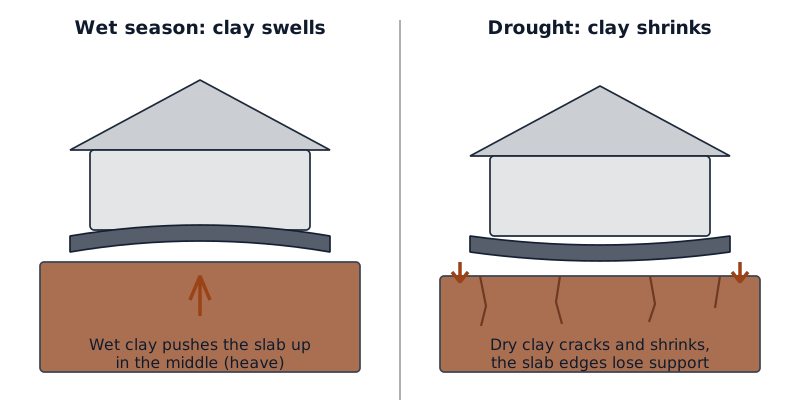
The soil explains why. The USDA describes Lake Charles clay, common across the Houston area, as 45 to 60% clay that opens cracks half an inch to two inches wide and a foot or more deep when dry. The series is named from a type location in Fort Bend County, so it sits under many homes in Sugar Land.
The myth part comes from overdoing it: flooding the bed swells the clay and can move a slab as much as drought does.
What is the best way to water your foundation?
The best way is a slow drip line or soaker hose laid in a ring around the whole house, buried a few inches or under mulch, and run on a timer in brief sessions. Texas A&M AgriLife advice, given to CBS News Texas, is to keep the line 8 inches or more from the concrete, let it drip slowly, and watch the soil for overwatering. Never aim water directly at the slab.
- Hand watering. Free, but uneven and easy to forget. Fine for one dry corner, poor as a system.
- Soaker hose. The cheapest real system. Flow drops toward the far ends of long runs, so keep each run short.
- Drip line with emitters. Costs more but waters evenly along the whole perimeter, and pairs well with a timer and a pressure regulator.
- Sprinkler zone. Sprays the surface and loses water to evaporation and runoff.
For most Houston houses, a drip line on a timer is the best foundation watering system. Layout steps are in how to install a soaker hose for your foundation.
What pushes the price of a foundation watering system up or down?
Four things move the price most: how many feet of perimeter you need to cover, whether a pro installs it, how many zones the house needs, and whether you tie into an existing sprinkler system. Paths and patios the line must cross add labor and fittings.
Other costs to plan for:
- Controls. A timer, a pressure regulator and a backflow preventer protect the line and the water supply.
- Trees. A large tree near the house can dry the clay faster than any hose refills it. A foundation root barrier is a separate job with its own price.
- Drainage. If water ponds against the slab after rain, fix that first; foundation drainage systems cost covers those prices.
What does a DIY foundation watering kit include?
A typical drip kit includes tubing, emitters or drip line, connectors, end caps and stakes, and the better ones add a pressure regulator and a backflow preventer. Kits sold for gardens usually cover 150 to 750 square feet of bed. A timer is often sold separately. Check what's included before you buy, because missing parts mean extra trips to the store.
How often should you water your foundation?
Water when the soil near the slab starts to dry and pull away, not on a fixed calendar. In a Houston summer dry spell that can mean short sessions every few days. In a wet month, turn the system off. Clay takes water slowly once damp, so two short runs with a soak in between work better than one long one. Check the soil by hand or with a moisture meter.
A simple Houston foundation watering schedule: short night or early morning sessions every few days in a summer drought, water only after a dry week or two in spring and fall, rarely in winter, and off after heavy rain until the top few inches dry.
When is a watering system not enough?
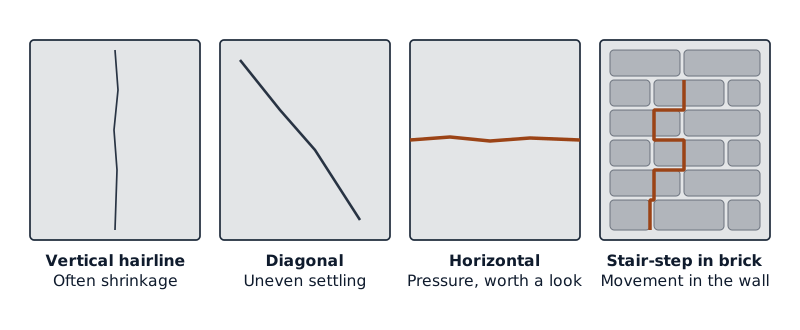
When the house has already moved. Signs such as stair-step cracks in brick, doors that bind, gaps around window frames or a floor that slopes mean the slab has shifted, and watering won't bring it back. Some homes need both: repair first, then a watering system to keep the soil steady afterward.
A foundation inspection in Houston averages about $600, with a usual range of $300 to $1,000, according to a 2026 Houston Press guide. If the inspection finds a settled section, slab foundation repair is the next step. When you ask through the quote form, we'll arrange a visit from a local foundation contractor, and the price comes in writing after they've seen the house.
Questions people ask
Does watering your foundation really help?
Yes, on expansive clay, as long as the watering is even and moderate. Steady moisture at the perimeter reduces the seasonal rise and fall of a slab edge. It won't repair cracks or lift a settled corner, and too much water causes swelling, so check the soil rather than running the system nonstop.
How far from the foundation should a watering system go?
A Texas A&M AgriLife water conservation specialist has advised at least 8 inches from the foundation. Many homeowners place it a little further out, in the bed or under mulch, so water spreads into the clay without pooling against the concrete. Keep the distance the same all the way around.
Is a drip system worth it over a soaker hose?
For a full perimeter, usually yes. A soaker hose costs less but waters unevenly on long runs, so the far ends stay drier than the faucet end. A drip line with emitters delivers a steadier amount along its length and works well on a timer. If you only need to cover one side of the house, a soaker hose is fine.
Can I connect a foundation watering system to my sprinkler system?
Often, yes. A contractor can convert an existing bed zone to drip or add a new zone, which national guides price at about $300 to $1,200 per zone. Ask for a backflow preventer and a pressure regulator on the line, since drip parts need lower pressure than spray heads.
Prices are one part of the job: foundation repair in Houston covers the rest.
Sources
- LawnStarter, drip irrigation cost guide (October 2026)
- Lawn Love, drip irrigation cost guide (October 2026)
- USDA NRCS, Lake Charles soil series description
- CBS News Texas, Texas A&M AgriLife water conservation specialist on foundation watering (2015)
- Houston Press, guide to foundation repair in Houston (2026)
Last changed