To install a soaker hose for your foundation, split the perimeter of the house into runs of 100 feet or less, connect each run to a faucet through a backflow preventer, a pressure regulator and a timer, lay the hose at least 8 inches out from the slab, pin it down and cover it with mulch or a thin layer of soil. Then test what it puts out and set the timer for slow night watering. The why behind watering a Houston slab is covered in watering your foundation with a soaker hose. This page is the hands-on part: parts, layout, steps, timer settings and the mistakes that undo the work.
What do you need to install a soaker hose around your foundation?
You need enough soaker hose to circle the house in runs of no more than 100 feet, a plain garden hose to carry water from the faucet to the start of each run, a backflow preventer, a pressure regulator, a hose splitter if you have more than one run, a battery timer, garden pegs or landscape staples, and mulch. Plumber's tape on the threads stops drips at each joint.
Measure before you buy. Walk the outside of the slab with a tape or a measuring wheel, add a few feet at each corner, and note where the faucets are. Most houses have one on the front and one at the back, so two or three runs fed from two faucets is a common layout.
| Part | What it does | Notes |
|---|---|---|
| Soaker hose | Seeps water into the clay | Sold in 25 to 100 foot lengths; keep each run under 100 feet |
| Leader hose | Carries water from faucet to bed without wetting the path | A plain garden hose |
| Backflow preventer | Stops hose water flowing back into the house supply | Screws onto the faucet first |
| Pressure regulator | Keeps pressure in the hose's working range | Most soaker hoses work best near 60 psi |
| Splitter | Feeds two runs from one faucet | Lets each run have its own timer |
| Timer | Turns water on and off at set times | Battery models fit straight onto the splitter |
| Pegs or staples | Hold the hose in place | One every few feet, more at corners |
| End caps | Close the far end of each run | Usually come with the hose |
A store-bought foundation watering kit bundles most of this. Check what's included before you pay, because some kits leave out the regulator or the timer. What a foundation watering system costs compares kit prices with a drip line put in by a pro.
How far from the foundation should a soaker hose go?
Lay it at least 8 inches out from the slab, the distance a Texas A&M AgriLife water conservation specialist has advised for foundation watering. That puts water into the clay that supports the edge of the beam without pouring it directly against the concrete, where it can run under the slab or into a gap that has opened at the edge. Keep the same distance all the way around.
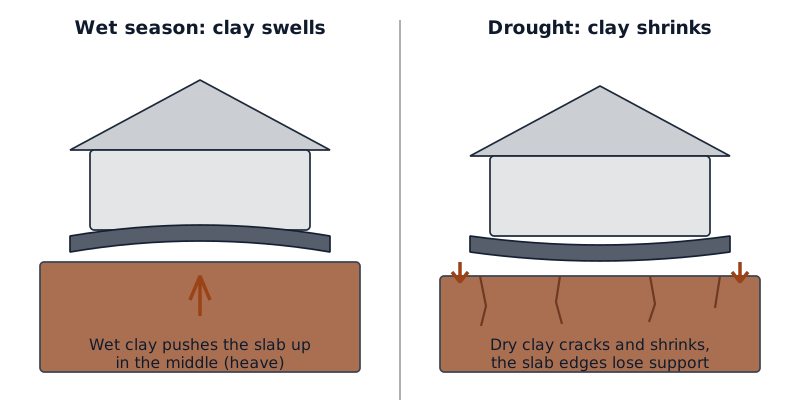
A few layout rules for a Houston lot:
- Cover the whole perimeter. The point is keeping all four sides at the same moisture. A slab that is wet on the shady side and dry on the sunny side moves unevenly.
- Do the garage too. It sits on the same slab, and its outside wall often faces the hottest sun.
- Go around trees, not between them and the house. A hose cannot keep up with a big tree's roots. If one stands close to the house, look at a foundation root barrier as well.
- Skip the sections under concrete. Where a driveway or patio meets the slab, stop the run and start the next one on the far side.
How do you install a soaker hose for foundation, step by step?
The install takes most homeowners an afternoon. You stretch the hose, flush it, lay it in a shallow groove along the beds, pin it, connect the fittings at the faucet, test it with the water on, and then cover it. Do it on a mild day when the hose is soft, and after rain if you can, so the clay is easier to dig.
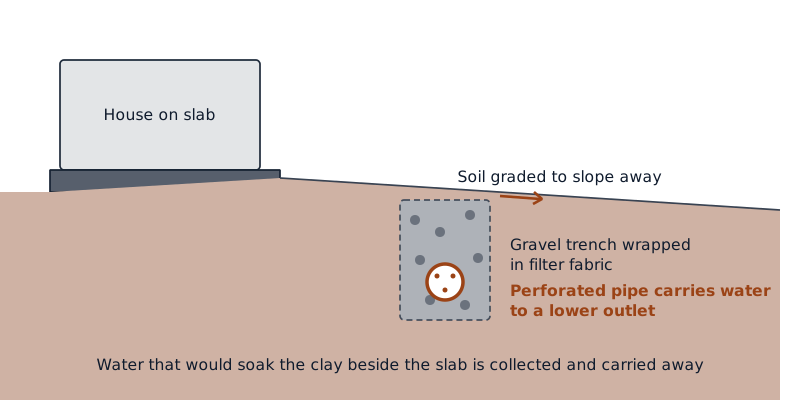
- Uncoil the hose in the sun. UGA Extension advice is to stretch a coiled round hose out in the sun before placing it, so it lies flat instead of springing back.
- Flush it. Connect it to the faucet and run water through it with the end cap off for a minute to clear any debris, then cap it and check that it sweats evenly along its length.
- Mark the line. Use a garden hose or spray paint to mark a line 8 inches or more out from the slab, following the house around the corners.
- Cut a shallow groove. A flat spade or edging tool makes a groove a couple of inches deep along the mark. Clay that has cracked open in a dry spell is hard; water it lightly the day before.
- Lay and pin the hose. Set it in the groove with the faucet end nearest the water and pin it every few feet. Leave a little slack at corners so it doesn't kink.
- Fit the faucet end. Screw on the backflow preventer, then the regulator, splitter and timer, then the leader hose. Wrap each thread with plumber's tape.
- Test before you cover. Turn the water on and walk the line. Look for dry patches, spraying holes and wet joints, and fix them now.
- Cover it. Push the soil back over the hose or lay 2 to 3 inches of mulch on top. Keep the connections at the faucet end uncovered so you can reach them.
How do you set a timer for a foundation soaker hose?
Find out how much water your hose actually puts out, then program short, slow night sessions. Put the hose in a bucket for one hour and measure what comes out. Next, run it in the bed for 30 minutes and check that the soil is damp about 2 inches deep and an inch either side of the hose. Use those two numbers to set run length and frequency.
UGA Extension advice is to water between 9 p.m. and 6 a.m., when less water is lost to evaporation. If you have two runs on one faucet, stagger their start times so each gets full pressure. Clay takes water in slowly once it's wet: the USDA describes the Lake Charles clay common around Houston as fast to soak up water when cracked and very slow once wet. So two short sessions with a soak in between work better than one long one.
Treat the first schedule as a starting point. Check the soil with a trowel or a moisture meter every week or so for the first month and adjust. You want damp clay, never mud, and in a wet spell you switch the timer off. A rain sensor, if your timer takes one, does that for you.
Can you build a DIY foundation watering system with drip line instead?
Yes. A DIY foundation watering system using drip line goes in the same way: the same 8 inch offset, the same faucet fittings and timer, and the same test before you cover it. The difference is the tubing. Drip line has emitters at set spacing, and pressure-compensating emitters keep the flow even on long or sloped runs where a soaker hose would leave the far end dry.
Drip line also needs a filter at the faucet end, because emitters clog, and it uses barbed fittings at every corner and tee. That makes it more work to install a foundation watering system this way, but it suits a big house or a lot with a slope. A soaker hose stays the simpler choice for a smaller house or a single dry side.
What mistakes ruin a foundation soaker hose setup?
The common mistakes are runs that are too long, hoses laid against the slab, leaks at the faucet, water left running, and hoses on bare ground. Each one either wastes water or leaves part of the perimeter dry, which is the uneven moisture you were trying to stop. Most are easy to avoid if you check the line once a month.
- Runs over 100 feet. UGA Extension notes soaker hoses don't work well past that length or uphill. Split the run instead.
- Too much pressure. Most soaker hoses may burst at 100 psi or more. The regulator prevents it.
- Leaky joints. With a timer the faucet stays open, so a drip at a joint runs all week. Replace worn washers and hose ends.
- Bare hose in the sun. Sun and mowers shorten the hose's life. Keep it covered.
- Ignoring the ends. The far ends of each run dry first. Check them, not just the faucet end.
When should you stop and call a foundation contractor?
Stop if the house has already moved. A soaker hose helps keep the clay from swelling and shrinking, but it won't close a wide crack, lift a sunken corner or level a floor. If you see cracks you can fit a coin in, doors that stick, gaps around windows or a floor that slopes, have the house looked at before you rely on watering.
Lifting or leveling a slab is structural work, and inside the City of Houston foundation repair needs a building permit: one weekly city permit report from July 2024 listed 23 of them. That is a job for a foundation contractor, not a weekend project. What you can safely do yourself sets out where the DIY line sits, and the warning signs of foundation problems helps you judge what you're looking at.
When we arrange a visit, a local foundation contractor measures the floor level, looks at the cracks, the drainage and any trees, and tells you whether the movement is seasonal or ongoing. If work is needed, you get the price in writing before anything starts. Houses in Katy and the west side are worth a closer look, as that area has some of the fastest ground subsidence measured in the region.
Questions people ask
How deep should you bury a soaker hose by the foundation?
Shallow. A groove a couple of inches deep, or the hose laid on the soil under 2 to 3 inches of mulch, is enough. That keeps the water in the top layer of clay near the slab edge, cuts evaporation and protects the hose from sun and mowers. Burying it much deeper makes leaks hard to find and the hose hard to flush. Leave the faucet end and fittings exposed.
Can I connect two soaker hoses end to end?
You can, but keep the total run at 100 feet or less. Past that, UGA Extension advice is that flow drops and the far end stays dry. For a longer perimeter, run a second hose from a splitter at the faucet, or from a second faucet on the other side of the house. Each run can then have its own timer setting.
Do I need a pressure regulator on a soaker hose?
It's a good idea. Most soaker hoses work best at about 60 psi and may burst at 100 psi or more, and household pressure varies. A regulator keeps the flow slow and even, which is what clay soil needs, and it makes the hose last longer. It's a small part that screws on at the faucet end, after the backflow preventer.
Should I water the foundation in winter in Houston?
Only if the ground is dry. Houston winters are often wet enough that the timer can stay off, but a dry, windy spell can still open cracks in the clay. Check the soil near the slab every couple of weeks. If it's dry a few inches down, run a short session. If it's damp, leave the hose off until it dries.
Can I put a soaker hose under a driveway or patio?
No. Water under concrete spreads unevenly and can wash out the soil under the slab edge, and you can't check or repair the hose there. Stop the run where the driveway or patio meets the slab and start the next run on the far side. If the clay under a driveway is the problem, the fix is drainage, which how to install foundation drainage covers.
For the wider picture, start with Foundation Repairs Houston Quotes.
Sources
- Harris-Galveston Subsidence District, 2025 annual groundwater report summary
- University of Georgia Extension, Fulton County, flower bed irrigation using a soaker hose system (2025)
- CBS News Texas, Texas A&M AgriLife water conservation specialist on foundation watering (2015)
- Saving Water Partnership, drip irrigation and soaker hoses
- USDA NRCS, Lake Charles soil series description
- City of Houston, weekly building permit report, July 2024
Last changed