The most common slab leak symptoms are a water bill that rises while your habits stay the same, the hiss of running water when every tap is closed, a warm or damp patch on the floor, and a water meter that keeps turning with nothing on. Drain line leaks show up differently, as odors, slow drains or wet ground near the house. A slab leak is a break in a plumbing pipe under the concrete, and the hub page on slab leaks and plumbing in Houston covers detection and drainage in general. This page goes deeper on the signs themselves: what each one tells you, how to test for it, and what else can look the same.
What are the most common slab leak symptoms?
The signs fall into three groups. Water you pay for but can't see: a higher bill, a meter that moves. Water you can feel or hear: a warm floor, a hissing sound, damp carpet or flooring that lifts. And water that has started doing damage: a musty smell, mildew at the base of walls, or new cracks near a wet area. One sign alone proves little. Two or three together usually do.
| Symptom | What it usually points to | How sure it makes you |
|---|---|---|
| Water bill up with no change in use | Any supply leak, inside or outside | Low on its own |
| Meter moving with every fixture off | A pressurized supply line | High, once toilets are ruled out |
| Warm patch on tile or concrete | The hot water line under that spot | High |
| Water heater running far more than usual | Hot water escaping somewhere | Medium |
| Sound of running water at night | A supply leak close to that wall or floor | Medium |
| Damp carpet, cupped wood or loose tile | Water rising through the slab nearby | Medium |
| Sewer smell, slow drains, gurgling | A drain line, which the meter can't show | Medium |
| Low water pressure at several fixtures | A larger supply leak | Low to medium |
| New cracks or a heaving floor near a wet area | Water changing the clay under the slab | Medium, and worth acting on fast |
How can you test for a slab leak yourself?
You can confirm a supply leak in an afternoon with the EPA's meter test: read your water meter, use no water at all for two hours, then read it again. If the numbers moved, water is leaving the system somewhere. The test can't tell you where, and it can't catch a drain line leak, but it costs nothing and settles the first question.
Run it in this order so a toilet or hose can't fool you:
- Rule out the toilets. The EPA suggests a few drops of food coloring in each tank. If color shows in the bowl within 10 minutes, the flapper is leaking. Flush afterward so the color doesn't stain.
- Shut off irrigation and the ice maker, and make sure no faucet, hose bib or washer is in use.
- Read the meter and note the time. Many meters also have a small leak indicator dial or triangle that spins at very low flow.
- Wait two hours with no water used in the house.
- Read the meter again. Any movement means a leak.
- Narrow it down. If your main shutoff is at the house, close it and watch the meter. If the meter still moves, the leak is on the yard side, between the meter and the house, not under the slab.
- Check the hot side. Turn off the cold supply to the water heater for the same window. If the meter stops, the leak is most likely on a hot line.
The EPA adds a bill check: a family of four using over 12,000 gallons in a winter month may have a serious leak. Stop at step 7. Opening a wall or the floor to look for the pipe is work for a plumber.
What does a warm spot on the floor mean?
A warm patch on a tile or concrete floor, often felt first with bare feet, usually means a hot water line is leaking under that spot. The escaping water heats the concrete from below. It is the clearest single sign of a slab leak, and it often pins down the location before a plumber arrives.
Tape around the edge of the patch so you can see whether it spreads. If the water heater also seems to run when nobody has used hot water, the two signs point the same way.
Which slab leak symptoms point to a drain line?
A drain line leak does not make the meter move, because drain pipes aren't under pressure. Instead you notice sewer odors indoors, drains that run slowly or gurgle, damp flooring near a shower or tub, or soggy ground by a cleanout outside. Drain leaks are slow, so they often go unnoticed for months while the soil under the slab gets wetter.
A smell near a bathroom that is worst after showers, or several fixtures draining slowly at once, points to the shared line rather than one clogged trap. A plumber checks drain lines with a camera through a cleanout, or by plugging and filling the system to see whether the level drops. That is the part of slab leak detection you can't do at home.
What else can look like a slab leak?
Several things mimic a leak under the concrete. Rainwater can wick up through a slab or run under it after a storm. Air ducts cast into older slabs collect condensation. A water heater relief valve can drip. A broken irrigation line in the yard moves the meter too. Ruling these out first saves you from paying to cut into a sound floor.
- Wet floors only after rain suggest groundwater and grading, not plumbing. See water coming up through a slab after rain.
- Damp registers or musty air from floor vents on an older slab can come from ducts in the concrete. See how to repair air ducts in a slab foundation.
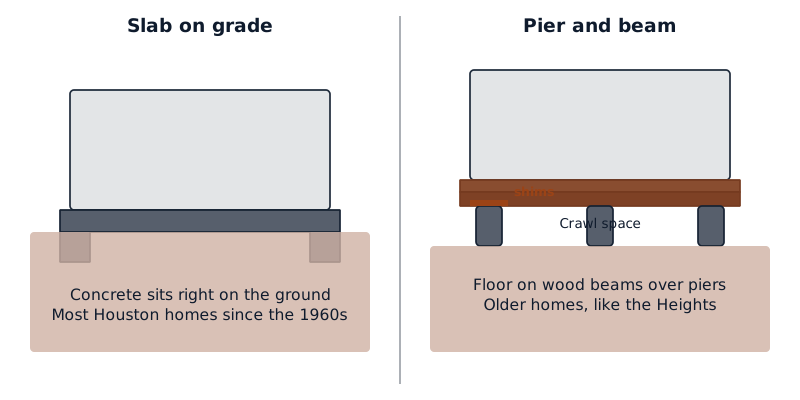
- A pier-and-beam house has its pipes in the crawl space, so look underneath first. City guidelines describe most Houston Heights homes as pier and beam.
Can a slab leak damage your foundation?
Yes. Water from a long leak changes the clay under the slab. The USDA describes the Lake Charles clay common around Houston as 45 to 60% clay, a soil that swells when wet and shrinks and cracks when dry. A leak can lift one part of the slab while the rest stays put, or wash out support so a section drops.
New drywall or tile cracks near the wet area, or doors sticking in nearby rooms, suggest the slab has moved. Fix the plumbing first, or the soil keeps changing and the movement returns. The wider list of warning signs is in foundation signs of problems.
What should you do when you notice slab leak symptoms?
Run the meter test, then call a plumber for slab leak detection before anyone cuts concrete. The Texas State Board of Plumbing Examiners regulates the plumbing trade here, so ask to see a current Texas plumbing license. If water is pooling or the meter is spinning fast, close the main shutoff and leave it closed until the plumber arrives.
Take photos and keep your water bills. The Texas Department of Insurance says most homeowners policies cover a sudden and accidental release of water but not a continuous leak, and damage to foundations or slabs is an optional endorsement. The detail is in whether homeowners insurance covers slab leak repair, and prices for finding and fixing the pipe are in foundation leak repair cost.
Once the line is repaired, have the slab looked at if you saw cracks or uneven floors. Foundation repair inside the City of Houston needs a building permit, so any lifting work is planned and filed before it starts. Tell us what you found and we'll arrange a visit from a local foundation contractor, with a written quote before any work begins.
Questions people ask
Can you have a slab leak with no water on the floor?
Yes, and it's common. Water under a slab often soaks into the soil below instead of rising through the concrete, so the floor can stay dry for weeks or months. In that case the bill, the meter test, a warm spot or the sound of running water are the only early clues. Moisture usually shows at the surface only once the soil beneath is saturated.
Does a slab leak always mean the foundation needs repair?
No. Many slab leaks are found and fixed before the soil has changed enough to move the slab. Foundation work comes into it only if you see new cracks, sloping floors or sticking doors near the leak after the plumbing is repaired. A foundation inspection once the pipe is fixed tells you whether the slab has moved or the soil just needs time to dry.
Can a high water bill alone mean a slab leak?
Not by itself. A running toilet, a dripping outdoor faucet, an irrigation zone stuck on or a leak in the yard line all raise the bill too. Treat a high bill as a reason to run the two-hour meter test and the toilet dye test. If the meter moves after those are ruled out, and stops moving when you close the main at the house, the leak is likely indoors or under the slab.
Is a slab leak an emergency?
It depends on how fast the water is going. A meter that spins visibly, water pooling on the floor, or a sharp drop in pressure calls for closing the main shutoff and calling a plumber the same day. A slow leak found by the meter test isn't an emergency, but it shouldn't wait for weeks, since steady water under the slab keeps working on the clay.
For the wider picture, start with the foundation repair guide for Houston.
Sources
Last changed