Foundation heave repair fixes a slab that has been pushed up, not one that has dropped. In Houston the cause is almost always clay soil swelling as it takes on water, from a leak, poor drainage or a tree that was cut down. A heaved section can't be forced back down, so the repair works the other way: stop the water, let the soil settle into a steady state, then lift the low parts of the house to meet the high spot. This guide is the narrow follow-on to settling, soil and movement, which covers sinking. It explains how heave is confirmed, what drives it, and how the repair runs.
What is foundation heave, and how is it repaired?
Foundation heave is upward movement of a slab or pier caused by soil that swells beneath it. The repair has three parts: find and stop the extra water, give the soil time to stop moving, then level the house by raising the lower areas to the heaved one. Shaving the high spot down is not an option on a structural slab, so the work is about matching heights and steadying the soil conditions.
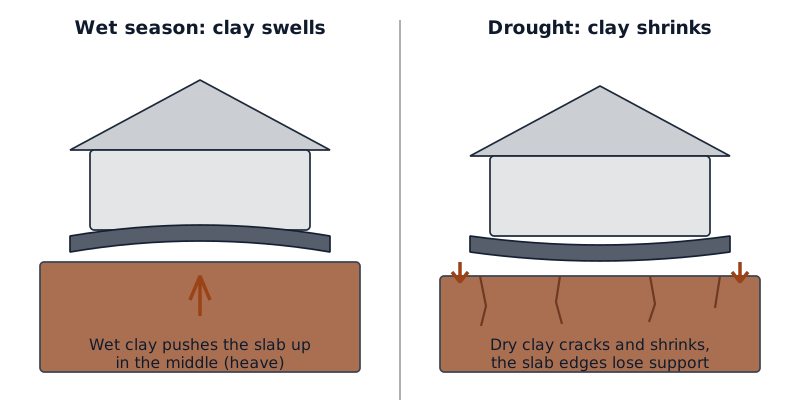
Clay is the reason this happens here. The USDA describes the Lake Charles clay under much of the metro as 45 to 60% clay, with very slow permeability once it is wet. That combination means water that reaches it stays a long time, and the soil keeps its swollen volume. A slab sitting on it rises where the clay is wettest.
Heave and sinking often happen on the same house at once. The edges dry out and drop in summer while the middle, shaded and covered, stays damp and stands high. That is why a correct diagnosis matters before anyone quotes a fix.
How can you tell foundation heave from settling?
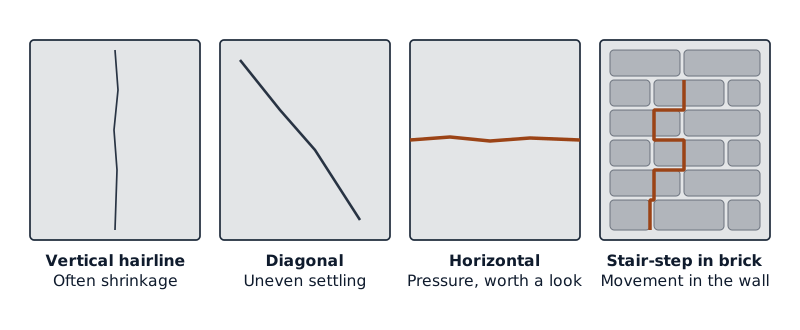
You usually can't tell by eye, because a crack or a sloping floor looks the same whether one side went down or the other came up. A floor elevation survey shows the shape of the slab, and repeat surveys months apart show which way it is moving. Clues like a recent leak, a removed tree or a damp middle room point toward heave.
The ASCE Texas Section guideline for evaluating residential foundations asks the engineer for a scaled drawing of relative elevations across the floor, with the floor coverings allowed for. A single survey gives you a snapshot. Two or three over a year tell you whether the high area is still rising.
| Clue | Leans toward heave | Leans toward settling |
|---|---|---|
| Where it's high or low | High spot in the interior, often near plumbing | Low corners or edges, often on the sunny side |
| Timing | Worse after a wet spell, a leak or tree removal | Worse after a long drought |
| Water clues | Damp carpet, high water bill, soggy bed against the slab | Soil pulled away from the slab, open cracks in the yard |
These clues are hints, not proof. An engineer's report, explained in what a structural engineer does in a foundation repair, is how you get a firm answer.
What causes a foundation to heave in Houston?
Water reaching clay that was drier before is the cause in nearly every case. The common sources are leaking water or sewer lines under the slab, roof runoff and poor grading that send water against the house, heavy watering of one bed, and removing a large tree whose roots kept the soil dry. Each one swells the clay in one place while the rest stays put.
The ASCE Texas guideline lists leaking plumbing among the factors that affect foundation performance. On trees, it warns that removal may cause upheaval from rising soil moisture, especially when the tree is older than the house, and that a waiting period may be recommended to let that heave happen before repairs. That is worth knowing before you cut down a big oak next to the slab.
Drought makes things worse later. The USDA notes that Lake Charles clay cracks open up to 2 inches wide and a foot or more deep in dry spells, and water enters fast while those cracks are open. The first big storms after a dry summer can push a lot of water into the soil quickly.
Can a heaved foundation be pushed back down?
No. A heaved slab can't be forced back down, and the swollen clay under it won't shrink on command. Once a leak is fixed, the rise may ease a little as the soil dries, but you can't count on it. Usually the repair is to lift the lower areas up to the high point, so the house is level again at the new height.
That approach has limits. Raising most of a house to meet one high room is a bigger job than lifting a single sunken corner, and it can push door frames, plumbing and finishes around. The ASCE Texas guideline also says plainly that lifting is unlikely to produce a perfectly level foundation; the aim is slopes you can live with. In severe cases where a section has cracked and risen badly, partial demolition and reconstruction of that part of the slab is one of the methods the guideline lists.
How a contractor lifts a house on supports, and what that costs, is covered in foundation leveling in Houston.
What does a heave repair involve, step by step?
A heave repair follows the water first and the concrete second. The house is measured, the plumbing is tested, the water source is fixed and the soil is given time to steady. Only then are the lower areas lifted on supports, with a gap left under the slab, before a final plumbing test and survey. The steps below follow the ASCE Texas guideline.
- Measure. Take a floor elevation survey and note cracks, doors and windows.
- Test the plumbing. Pressure test the water lines and test the drain lines for leaks under the slab. The signs worth checking first are on slab leak symptoms.
- Fix the water source. Repair leaks, extend downspouts well past the slab, and regrade. The guideline asks for a 5% slope away from the house, about 6 inches in 10 feet, for the first 10 feet where practical.
- Wait and remeasure. Give the soil time to settle into a steadier moisture level, then survey again to see if the high spot is still moving.
- Design the lift. An engineer sets where supports go and how much each area rises. Underpinning helps only the areas it supports, the guideline notes.
- Lift and leave a gap. The FPA piling guideline says a void left under a lifted slab should usually stay, so swelling soil has room without pushing the slab again.
- Test the plumbing again. The ASCE guideline calls for water and drain lines to be retested after any lift, and leaks fixed.
- Final survey. Record the new elevations and keep a copy.
Inside the City of Houston, foundation repair needs a building permit. A Houston Press guide puts most Houston repair jobs at $3,300 to $6,800, though a heave job that lifts much of a house can run higher. The written quote after a visit sets your price.
Will foundation piers stop a slab from heaving?
Not on their own. Pressed concrete piers support a slab from below but don't hold it down. The Foundation Performance Association's piling guideline says they typically won't resist uplift from swelling soil. Piers stop sinking; heave is controlled by keeping water away from the clay and leaving room under a lifted slab for the soil to swell.
The same guideline notes that contractor warranties usually exclude upward movement, unless the contract says otherwise. Ask about heave by name before you sign. More on how pressed piers are built and where they fall short is on concrete foundation piers.
What can you do yourself, and where does the DIY stop?
You can find and stop most of the water yourself. Check the water meter with every tap off, clear and extend downspouts, fix low spots where water pools against the slab, and keep watering even around the whole house. You can also track cracks and doors with dates. Lifting, cutting or breaking a slab is work for a contractor, with a permit in Houston.
The ASCE guideline cautions against excessive watering, which matters here: a soaker hose run too long on one side can cause the very swelling you're trying to fix. Even, modest moisture is the goal. Drainage fixes beyond a downspout extension, such as a buried drain line, are covered on foundation drainage in Houston.
A foundation inspection in Houston costs about $300 to $1,000, according to the Houston Press guide, and This Old House puts a structural engineer report at $500 to $1,000. For a suspected heave, that report is worth having before any lifting starts.
Questions people ask
How long does foundation heave repair take?
The lifting itself often takes a few days. The whole repair usually takes longer, because the water source has to be found and fixed first, and the soil may need weeks or months to steady before a final survey. If a big tree was removed, an engineer may suggest waiting for the heave to run its course. Ask your contractor for a timeline in writing.
What should I ask before I hire someone for foundation heave repair?
Ask how they confirmed it is heave and not settling, whether the plumbing has been tested, which areas will be lifted and by how much, and whether a void will be left under the slab. Ask whether the permit and a post-lift plumbing test are included, and whether the warranty covers upward movement. Get every answer in the written quote.
Do I need to be home for foundation heave repair?
Usually not for every hour. You or someone you trust should be there at the start, for the plumbing tests and for the final walk-through and survey. Most people stay in the house during the work, though water may be shut off for tests and doors can shift as the house moves. Clear the rooms and yard areas where supports go.
Can foundation heave come back after a repair?
Yes, if the soil gets much wetter again. A new leak, a blocked downspout or heavy watering on one side can swell the clay under any part of the slab. That is why the water work matters more than the lift. Keep drainage clear, water evenly in droughts and watch the meter. Many warranties exclude heave, so prevention is on you.
Does removing a tree cause foundation heave?
It can. A large tree draws water out of the soil near a house. Once it is gone, that clay can slowly take on water and swell, lifting the slab nearby. The ASCE Texas guideline flags this risk as highest when the tree is older than the house. Pruning may be the safer choice; if you need protection from roots instead, see foundation root barriers.
This guide is one of many on foundation repair in Houston.
Sources
- ASCE Texas Section, Guidelines for the Evaluation and Repair of Residential Foundations, Version 3 (April 2022)
- Foundation Performance Association, FPA-SC-08-1, guidelines for precast concrete segmented piles for foundation underpinning (Rev. 1, March 2014)
- USDA NRCS, Lake Charles soil series description
- Houston Press, guide to foundation repair in Houston (2026)
- This Old House, foundation repair cost guide (October 2026)
- City of Houston weekly building permit report, July 2024
Last changed