Worry about a foundation crack when it is wider than about 1/4 inch, when it keeps growing, when one edge sits higher than the other, or when it runs sideways. Worry sooner if it shows up with sticking doors, sloping floors or gaps at the trim. A thin crack that stays the same size is usually concrete shrinkage and only needs watching. On Houston clay, most foundations pick up a few hairline cracks, so the question is less "is there a crack" and more "is it moving." This page covers what normal and bad cracks look like, how to test one at home, and what foundation crack repair usually costs.
How serious is a crack in a foundation?
Most foundation cracks are not serious. Concrete shrinks as it cures, and thin cracks from that shrinkage are expected in almost every slab. A crack becomes serious when it signals movement: it widens over weeks or months, one side drops below the other, water comes through it, or the house shows other signs of shifting. Size matters less than change, so track a crack before you judge it.
This Old House makes the same point: whether a crack is stable or changing tells you more than how wide it is on the day you find it. A 1/8 inch crack that has looked the same for five years is a smaller worry than a hairline crack that doubled since spring.
Houston adds a local reason to keep watching. Much of the area sits on clay like the Lake Charles series, which the USDA describes as 45 to 60% clay. When it dries out, the ground itself cracks 1/2 inch to 2 inches wide and a foot or more deep, and those cracks stay open for 60 to 90 days in most years. As the clay shrinks and swells with moisture, it puts uneven pressure on the slab, and cracks that were stable can start to move after a long drought or a very wet season.
What does a serious foundation crack look like?
A serious foundation crack is usually wider than about 1/4 inch, wider at one end than the other, or offset so one face of the concrete sits proud of the other. Horizontal cracks, cracks that run diagonally from a corner, and stair-step lines through the mortar of brick veneer all point to movement. Damp edges or water stains around the crack can mean moisture is getting through it.
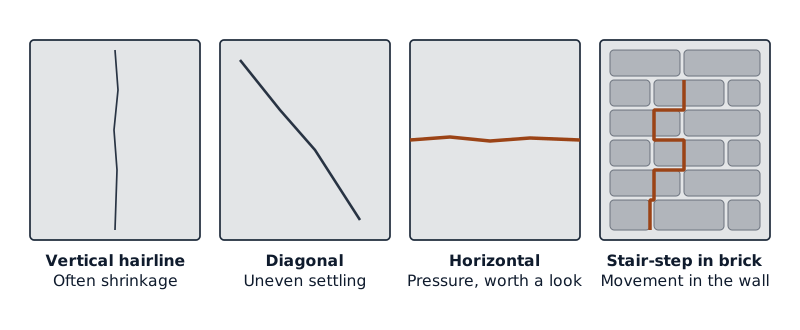
Compare what you see with this table:
| What you see | Usually normal | Worth a professional look |
|---|---|---|
| Width | Hairline, a thin line | Over about 1/4 inch, or getting wider |
| Direction | Vertical or random hairline | Horizontal, or diagonal from a corner |
| Edges | Flush on both sides | One side higher, or wider at one end |
| Change | Same size for months | Longer or wider each time you check |
| Moisture | Dry | Damp, stained or letting in water |
| Other signs | None | Sticking doors, sloping floors, gaps at trim |
Direction tells you a lot, and the difference is covered in detail on vertical vs horizontal foundation cracks. Pictures of normal foundation cracks shows common patterns.
Are foundation cracks a concern?
Foundation cracks are a concern only some of the time. Hairline cracks from curing are common in new and older homes and are usually cosmetic. They become a concern when they grow, let in moisture, or arrive with signs that the structure is moving. The safest approach is to measure the crack, date it, and check it again over the next few months.
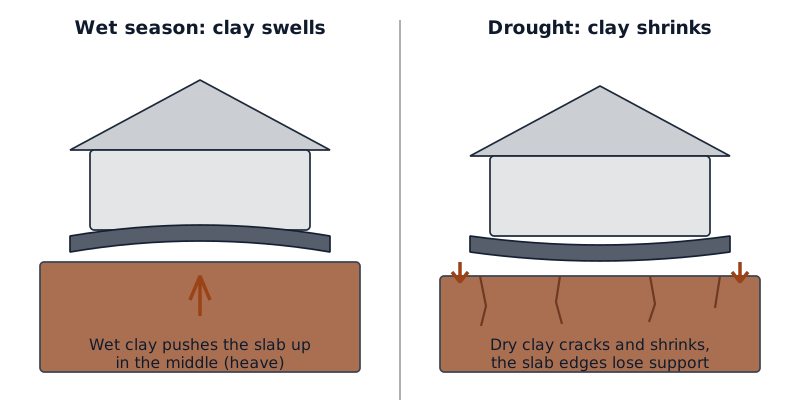
Most Houston homes are slab on grade or older pier and beam, and very few have a basement. That changes where you look. Instead of basement walls, check the exposed edge of the slab outside, the garage floor, brick veneer, interior drywall and the corners above doors and windows. On a pier-and-beam house, look at the piers and beams in the crawl space as well.
Cracks inside the house are often the first clue. Drywall cracks running off the corners of door frames, and doors that suddenly rub or won't latch, can mean the slab has shifted under that wall. Doors sticking explains how to tell seasonal swelling from a foundation cause.
Are cracks in a concrete slab normal?
Yes, some cracks in a concrete slab are normal. Concrete shrinks as it cures, and thin, scattered cracks often appear within the first couple of years after a pour. They show up in garage floors, under flooring and along the slab edge. A slab crack is not normal when it is wide, offset, growing, or lines up with cracks in the walls above it.
Under carpet or tile you may never see slab cracks until flooring comes up. Hairline cracks found that way usually only need sealing before the new floor goes down. If tile has cracked in a straight line across several pieces, or the floor slopes toward the crack, the slab has probably moved, and that is worth having checked.
How can you tell if a crack is structural?
A crack is likely structural when it comes with movement you can see or measure elsewhere in the house. Signs include sloping or uneven floors, leaning walls, doors and windows that suddenly stick, gaps between walls and ceilings that keep growing, and water entering through the foundation. A crack wider than about 1/4 inch on its own is also treated as a possible structural sign.
You can do a simple test at home:
- Mark the ends. Draw a pencil line across each end of the crack and write the date beside it.
- Measure the width. Use a ruler or a set of feeler gauges at the widest point and note it.
- Photograph it. Put a coin or ruler in the frame so later photos compare fairly.
- Check again. Look every few weeks for two or three months, and after heavy rain or a dry spell.
- Look around it. Check nearby doors, windows, floors and brick for new problems.
If the crack grows past your marks, call for an inspection. A foundation inspection measures floor levels across the house, which shows whether one area has dropped. The difference between a house that has settled and one that is still moving is set out on foundation problems vs settling.
How big of a foundation crack is serious?
A foundation crack wider than about 1/4 inch is the usual point where it may be structural and should be looked at. Thin hairline cracks that stay the same size are generally cosmetic. Between those, the trend decides: a crack that widens from 1/16 inch to 1/8 inch over a summer is more serious than a steady one at 3/16 inch.
Width is also not the only measure. A narrow horizontal crack can matter more than a wider vertical one, because sideways cracking points to pressure pushing on the foundation. Any offset, where you can catch a fingernail on the step between the two sides, is worth a professional opinion whatever the width.
When should you worry about cracks in walls?
Worry about cracks in walls when they are wider than about 1/4 inch, run diagonally from the corners of doors or windows, reappear after patching, or come with sticking doors and sloping floors. Thin, straight cracks along drywall seams are often just the house drying or the tape joint failing. Stair-step cracks in exterior brick are usually a sign the slab under that wall has moved.
Wall cracks often appear before slab cracks do, because drywall and brick are less forgiving than concrete. If several rooms on the same side of the house are cracking, that pattern matters more than any one crack.
What should you do about a crack that worries you?
Start with a record: the width, the date and photos. Then deal with water around the house, because wet and dry swings in the clay drive most movement. Keep gutters clear, make sure the ground slopes away from the slab, and fix leaks near the foundation. If the crack keeps growing, ask for an inspection before you pay for a repair.
The Houston Press guide puts foundation inspections in Houston at about $300 to $1,000, averaging around $600. What an inspector checks and what you get in writing are covered on foundation inspection.
Plenty of cracks never need a repair at all. The guide to non-structural foundation cracks shows the ones you can simply watch.
Questions people ask
What is the difference between structural cracks and non-structural cracks?
A non-structural crack comes from concrete or plaster shrinking and does not affect how the house carries its weight. It stays thin and stable. A structural crack comes from the foundation moving, often from settling or soil pressure. It tends to widen, offset or come with sticking doors and sloping floors, and it usually needs the cause fixed, not just the crack filled.
How big of a foundation crack is bad?
A foundation crack is usually considered bad once it passes about 1/4 inch wide, or when it is smaller but clearly growing. A horizontal crack of any width, or one with one edge sitting higher than the other, is also a warning sign. Thin hairline cracks that stay the same are normally cosmetic and only need sealing to keep moisture out.
Does house insurance cover cracks in walls?
Often not, when the cause is settling or soil movement. The Texas Department of Insurance lists earth movement among the risks most policies don't cover, and lists damage to foundations or slabs as an optional add-on you can buy. Damage from a sudden covered event may be handled differently. Read your own policy, or ask your agent before you file a claim.
What are the different types of cracks?
The main types are hairline, vertical, diagonal, horizontal and stair-step. Hairline and vertical cracks are usually shrinkage or minor settling. Diagonal cracks often mean one part of the foundation settled more than another. Horizontal cracks are the most concerning, since they point to pressure on the wall. Stair-step cracks follow the mortar joints in brick or block and usually mean uneven settling.
How expensive is it to repair foundation cracks?
Filling or sealing a crack typically costs $250 to $800, according to This Old House. If the crack comes from movement, the repair is bigger: most Houston foundation repair jobs run about $3,300 to $6,800, says the Houston Press guide. This Old House warns a crack that could be sealed cheaply can become a $10,000 to $15,000 repair if left. See foundation crack repair cost for the breakdown, or ask for a written quote.
The rest of our guides start from foundation repair across Houston.
Sources
- This Old House, foundation cracks: what is normal and when to worry (April 2026)
- This Old House, foundation repair cost guide (October 2026)
- Houston Press, guide to foundation repair in Houston (2026)
- USDA NRCS, Lake Charles soil series description
- Texas Department of Insurance, homeowners insurance guide
Last changed