Usually not. Home insurance in Texas pays for foundation repair only when a covered event caused the damage, and the most common causes in Houston, clay soil shrinking and swelling, settling and age, are excluded by nearly every policy. The main exception is a plumbing leak under the slab: if your policy carries foundation coverage, it can pay for the settling and cracking that leak caused. Below we go through what Texas policies say, how slab leaks fit in, cracks, home warranties, what you pay if the claim is refused, and how to file well. For local repair options, start on the Houston foundation repair home page, and for the whole topic see our guide to insurance and foundation repair.
Does homeowners insurance cover foundation repair in Texas?
In most cases, no. The Texas Department of Insurance lists earth movement and wear and tear among the risks most home policies do not cover. The widely used HO 00 03 form also excludes settling, shrinking, bulging or expansion of foundations, floors and walls, along with the cracking that results. Since soil movement causes most Houston foundation trouble, most repairs here are paid by the homeowner.
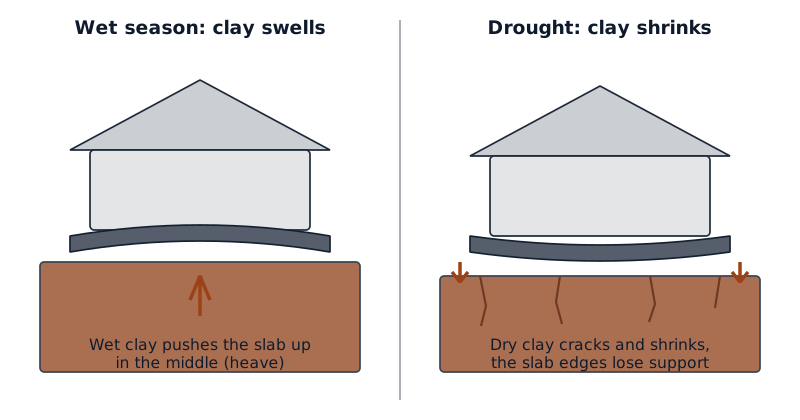
The reason is the ground under the city. The USDA describes Lake Charles clay, common across the Houston area, as 45 to 60% clay. In dry spells it opens cracks half an inch to two inches wide and a foot or more deep, then closes them again when the rain returns. An insurer sees that as slow, expected movement, not a sudden accident, and that is the line policies draw.
What the policy does pay for is the sudden and accidental. TDI lists a "sudden and accidental release of water" among the risks most policies cover. So the question is never just "is my foundation damaged?" It is "what caused it?"
Will insurance pay for foundation repair caused by a slab leak?
It can, if your policy has foundation coverage for plumbing leaks. TDI lists damage to foundations or slabs as an optional endorsement. The standard Foundation Coverage-Texas endorsement pays for settling and cracking of the slab, floor or footings caused by water or steam leaking from plumbing, heating, air conditioning or sprinkler systems, plus the cost of tearing out part of the house to get at the leak.
There are limits worth knowing before you call your insurer:
- The pipe itself is not covered. The endorsement pays for the damage and the tear-out, not the system that leaked.
- There is a cap. As TDI approved it, the endorsement limits payment to 15% of your Coverage A dwelling amount. Your insurer's version may differ.
- Slow leaks are a problem. TDI notes that most policies do not cover a continuous water leak, so a leak that ran for months gives the insurer room to refuse.
Most Houston homes built from the 1960s on sit on a concrete slab with water and drain lines running under it, which is why this route comes up so often here. Water from a broken line can soften the clay and wash out soil under one part of the slab. If the repair then needs piers under that area, the endorsement may pay toward it. Our page on slab foundation repair explains how that work is done.
Does homeowners insurance cover foundation crack repair?
Only when a covered event caused the crack. Cracks from settling, soil movement or age are excluded under the standard form, and that describes most foundation cracks in Houston. A crack caused by a sudden plumbing leak under a foundation endorsement, or by a fire, is a different story. The adjuster decides on the cause, so evidence of the cause matters more than the crack.
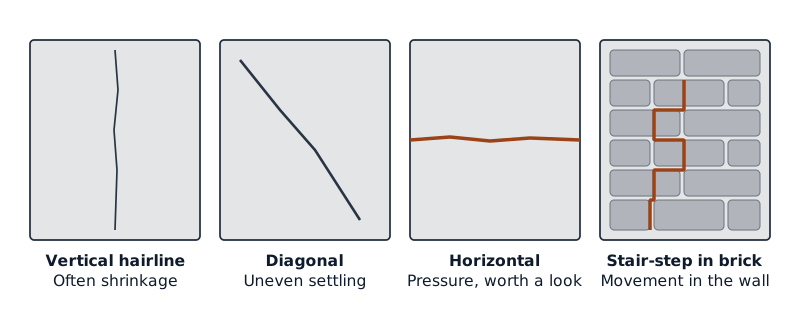
This is where a lot of claims fall apart. A homeowner sees a new crack after a dry summer, files a claim, and the adjuster's report says seasonal soil movement. The claim is denied, and the denial is on file.
Before filing for a crack, it helps to know whether you are looking at ordinary movement or real failure. Our guide to foundation settling covers how to tell the two apart, and a foundation inspection gives you floor elevation readings and a professional view of the likely cause before you decide.
Does a home warranty cover foundation repair?
Rarely. A home warranty, called a residential service contract in Texas, covers mechanical failure of appliances and household systems from normal wear and tear. The Texas Real Estate Commission says these companies fall under the Texas Department of Licensing and Regulation's service contract program. A foundation is not an appliance or a system, so standard contracts leave it out.
There is one useful overlap. TREC says these contracts can cover plumbing. Because the foundation endorsement on your homeowners policy does not pay for the leaking pipe, a home warranty that covers plumbing might pay for the pipe repair while the insurer pays for the foundation damage. Read both contracts before assuming either one will pay.
How much does home foundation repair cost if insurance won't pay?
Most foundation repair jobs in Houston cost $3,300 to $6,800, according to a 2026 Houston Press guide. This Old House puts the national range at $2,224 to $8,134, with an average of $5,179. The price depends mostly on how many piers the house needs, what type they are, and how hard the work area is to reach.
| Item | Typical price | Source |
|---|---|---|
| Most Houston foundation repair jobs | $3,300 to $6,800 | Houston Press, 2026 |
| Pressed concrete pier, each | $300 to $600 | Houston Press, 2026 |
| Steel pier, each | $1,000 and up | Houston Press, 2026 |
| Crack filling | $250 to $800 | This Old House |
| Foundation inspection in Houston | $300 to $1,000, about $600 on average | Houston Press, 2026 |
| Structural engineer report | $500 to $1,000 | This Old House |
| Building permit | $75 to $150 extra | This Old House |
Interior work adds about 15% and hard access adds 6 to 8% to pier costs in Houston, per the same guide. These are guides only. A local contractor gives you the real number after seeing the house. The foundation repair cost page breaks the prices down further.
Waiting rarely saves money. This Old House notes a hairline crack sealed for $250 to $800 can turn into a $10,000 to $15,000 repair if it is left to grow.
How do you get insurance to pay for foundation repair?
You give the insurer clear evidence that a covered event caused the damage, and you report it promptly. In practice that means confirming a plumbing leak with a test, getting an independent engineer's opinion on the cause, documenting everything before repairs, and checking that your policy has a foundation or slab endorsement. Without a covered cause, no paperwork will change the answer.
A sensible order of steps:
- Read your policy first. Look at the declarations page for a foundation or slab endorsement and note the limit.
- Stop the water. If you suspect a leak, shut off the main and call a plumber. TDI advises against permanent repairs before the insurer sees the damage, since that can lead to a denial.
- Document it. Photograph cracks with a tape measure in the shot, note sticking doors and sloping floors, and keep the plumber's test results.
- Report it quickly. TDI says some policies set a one-year filing deadline.
- Get the cause in writing. An engineer's report that ties the movement to the leak is the strongest thing you can bring.
- Be there for the adjuster, with your photos and reports.
Once you file, Texas rules give the insurer 15 days to acknowledge the claim, 15 business days to accept or deny it after it has all the information it needs, and five business days to pay once it agrees. If you disagree, the TDI Help Line is 800-252-3439.
If the claim is refused, the next step is the repair itself. Fixing the water problem around the house, through gutters, grading and foundation drainage, helps the repair last.
Questions people ask
Does house insurance cover cracks in walls?
Only if a covered event caused them. The standard HO 00 03 form excludes settling, shrinking and expansion of walls, floors and ceilings, and the cracking that results, so drywall and brick cracks from soil movement are not paid. Cracks from a covered event, such as fire or a sudden plumbing leak that moved the slab under a foundation endorsement, can be part of a claim.
Does home insurance cover leak detection?
It depends on your policy. Many claims for slab damage start with a plumber's leak test, and some insurers pay for finding and reaching the leak only as part of a covered loss. The Foundation Coverage-Texas endorsement includes tearing out part of the house to repair the leaking system. Ask your insurer before the test whether that cost counts toward the claim.
Are slab leaks covered by insurance?
The damage a slab leak causes may be covered, but the leaking pipe usually is not. If your policy has a foundation endorsement, it can pay for settling and cracking from the leak and the tear-out needed to reach it, up to its limit. A long-running leak is weaker, because TDI says most policies exclude continuous water leaks.
Does flood insurance pay for foundation damage?
A separate flood policy can pay for foundation damage caused directly by flooding. Standard home policies do not, and TDI says most flood policies have a 30-day waiting period, so it needs to be bought well before a storm. Seasonal clay movement after a wet spell is not flood damage and stays excluded.
Will homeowners insurance cover foundation repair on an older pier and beam house?
Generally not, if the problem is rotting wood, sinking piers or settling over time. That is wear and tear and earth movement, which TDI lists among the risks most policies leave out. A sudden covered event, such as a burst pipe soaking the soil under the house, is the exception, and the cause still has to be shown.
Sources
- Texas Department of Insurance, Home insurance guide
- Texas Department of Insurance, Commissioner's Order 02-0741 (Foundation Coverage-Texas endorsement and the HO 00 03 settling exclusion)
- Texas Real Estate Commission, Residential Service Companies (Home Warranties)
- Houston Press, guide to foundation repair in Houston (2026)
- This Old House, foundation repair cost guide (October 2026)
- USDA NRCS, Lake Charles soil series description
Last changed