A structural crack in a wall is one caused by the building moving, not by paint, tape or drywall drying out. It is usually wider than about 1/4 inch, keeps growing, has one side sitting proud of the other, or turns up with sticking doors and sloping floors. In a Houston house the cause is almost always below the wall: the slab or piers shifting on clay. That is why the fix starts under the house and finishes at the wall. This page sits under our guide to foundation crack repair and goes deeper on one thing: what makes a wall crack structural, and the order the repair goes in.
How can you tell if a crack in a wall is structural?
A wall crack is probably structural when it shows movement rather than shrinkage. Look for a crack wider than about 1/4 inch, a tapered crack that is wider at one end, an offset where one face sits higher than the other, or a crack that grows over weeks. Matching cracks in the brick outside, doors that stick, and gaps opening at the ceiling line all point the same way.
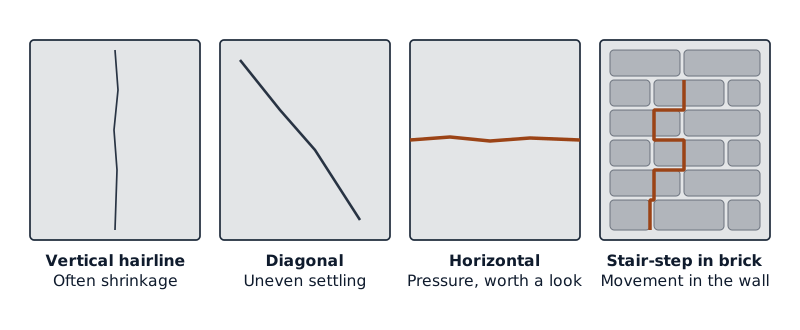
Hairline cracks along drywall seams that never change are usually cosmetic: framing drying out and seasonal humidity.
Direction helps too. Diagonal cracks from the corners of openings and stair-step cracks in brick are the common movement patterns here. Horizontal cracks are the most serious sign in most of the country, where they show soil pressure on a basement wall. Houston homes rarely have a basement, so a horizontal crack here more often means a beam, header or brick course has been pushed or pulled out of line.
For a pattern-by-pattern guide, see the types of cracks in walls. It also covers how to track one over a season.
What causes structural cracks in walls in Houston homes?
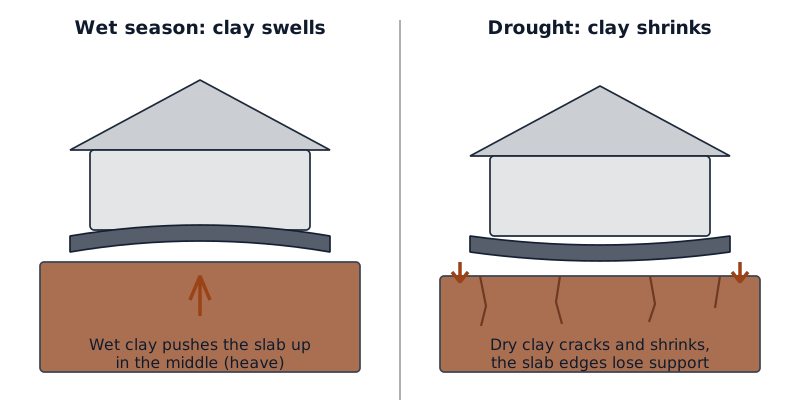
Most structural wall cracks in Houston start with the foundation. The area's heavy clay swells when wet and shrinks when dry, so one part of a slab or one line of piers moves more than the rest. The wall above has to follow, and it splits where it is weakest: at the corners of doors and windows, along brick joints, and where walls meet ceilings.
Less often, the cause is in the wall itself:
- An undersized or overloaded header or beam, often after a remodel removed a wall. The wall cracks above the opening.
- A steel lintel over a window or garage door in the brick that has rusted or has too little bearing. The Brick Industry Association calls for at least 4 inches of bearing at each end. A lintel that sags lets the brick above it drop and crack.
- Brick moving against concrete. The same technical note explains that brick expands while concrete foundations shrink, which strains the joint between them if there is no flashing to separate them.
Which walls in your house are structural?
A structural wall carries weight from above, the roof, ceiling joists or a second floor, and passes it down to the foundation. In most Houston homes those are the exterior wood-framed walls and a few interior walls running down the middle of the house. Partition walls that only divide rooms carry little. The brick you see outside is not carrying the house at all.
Most Houston houses built since the 1960s are a slab on grade with wood framing and a skin of brick. The Brick Industry Association describes that brick as an anchored veneer: it is tied sideways to the wood frame with metal anchors, sits on the foundation for its own weight, and is designed without relying on the brick to resist side loads.
- A crack in the brick veneer usually tells you the slab under it has moved. The brick itself can be repointed, but the cause is in the foundation.
- A crack in drywall on a load-bearing wall can mean the framing is moving with the foundation, or that a header above it is sagging.
- A crack in plaster in an older house, such as the pier-and-beam Craftsman bungalows the City of Houston describes in Houston Heights, often comes from piers or beams settling under the floor rather than from a slab.
How do you fix structural cracks in walls?
You fix a structural wall crack by stopping the movement first, then repairing the wall. Filling the crack first wastes the money: it reopens as long as the foundation, beam or lintel behind it is still moving. The usual order is to find the cause, stabilize or lift the foundation, put any framing right, and only then repair brick, drywall and trim.
How a job typically runs:
- Inspect and measure. A local foundation contractor measures floor levels across the house and maps the cracks, inside and out. In Houston an inspection runs about $300 to $1,000.
- Find the cause. Soil movement, a slab leak, drainage, tree roots, or framing.
- Get an engineer's view if it is unclear. A structural engineer report typically costs about $500 to $1,000. See structural engineer foundation repair for what one covers.
- Stabilize. Piers under the slab or new supports under a pier-and-beam floor, then foundation leveling to bring it back toward level. Lifting can narrow some wall cracks on its own.
- Fix framing and openings. Re-shim or replace a sagging header, replace a rusted lintel, and re-hang doors that bind.
- Repair the finishes. Repoint brick, re-tape drywall and repaint.
- Deal with moisture. Fix the drainage or leak that started it, and seal any slab cracks for waterproofing.
Most Houston foundation repairs land between about $3,300 and $6,800. Sealing one crack alone runs about $250 to $800 nationally: fine for a stable crack, no fix for a moving one.
How is each wall repaired once the foundation is stable?
Once the foundation has stopped moving, each wall material gets its own repair. Brick is repointed with matching mortar, and cracked bricks are swapped. Drywall is cut back, re-taped and floated. Plaster is keyed and filled. A failed header or lintel is replaced. Each repair holds only because the movement behind it has stopped.
| Wall | What the crack usually means | Repair after stabilizing |
|---|---|---|
| Brick veneer, stair-step | The slab under that wall has dropped | Repoint the joints, replace split bricks. See cracks in brick walls |
| Brick over a window or garage door | Lintel sagging, rusting or short of bearing | Replace or support the lintel, rebuild the brick above it |
| Drywall, diagonal from a corner | Framing racked by foundation movement | Cut out loose tape, re-tape with mesh, float and paint. |
| Drywall, horizontal near the ceiling | A sagging header or beam, or the walls dropping | Correct the support, then re-tape |
| Plaster, older pier-and-beam house | Piers or beams settling | Re-support the floor, then repair the plaster. |
Do you need a permit or an engineer to fix a structural wall crack?
Inside the City of Houston, foundation repair needs a building permit, and the city's weekly permit reports list foundation repair permits by the dozen. Permits typically add about $75 to $150. An engineer is not needed for every job, but one is worth having when the cause is unclear, a load-bearing wall or beam is involved, or you are buying or selling the house.
Some neighborhoods add their own steps. Work in the three historic districts of Houston Heights needs a Certificate of Appropriateness for changes to the outside of the house. Cities outside Houston set their own permit rules.
What can you safely do yourself before the contractor comes?
You can measure, record and remove the triggers, but leave the structure alone. Mark the ends of the crack with a pencil and a date, photograph it beside a ruler, and check it every few weeks. Fix a leaking hose bib or a downspout that drains against the slab. Do not remove, cut into or prop up a load-bearing wall yourself.
Hold off on filling or painting over the crack: a fresh patch hides how far it has moved. If a wall bulges, a ceiling sags or doors suddenly jam, get it looked at straight away.
When you are ready, we'll arrange a visit from a local foundation contractor who measures the house and explains the cause. You get the price in writing before any work starts.
Questions people ask
How long does it take to fix structural cracks in walls?
It depends on the cause. A stable crack that only needs sealing and refinishing can be done quickly, while a job with piers, leveling, a new header and drywall repairs runs over several days or longer, plus a wait before the final finishes. Permits and an engineer's report add time at the start. The contractor sets out the timeline in the written quote after seeing your house.
What should I ask before I hire someone for structural cracks in walls?
Ask what they think caused the cracks and how they know. Ask whether the price includes the permit, leveling measurements before and after, and repairs to drywall, brick and doors, or only the foundation work. Ask what warranty they offer in writing and whether it transfers if you sell.
Can you fix a structural crack in a wall with filler or caulk?
Not on its own. Filler, caulk or joint compound hides the crack, but the movement behind it keeps going and the crack comes back, often in the same place. Filler is the last step of a structural repair, after the foundation or framing has been stabilized. On its own it suits only hairline cracks that have stayed the same for months.
Are structural cracks in walls covered by home insurance?
Usually not when the cause is soil movement or settling, which many policies exclude unless a foundation endorsement was added. Damage from a sudden water release, such as a burst pipe, may be treated differently. Read your policy wording or ask your agent before you file. Our guide to insurance and foundation repair covers what to check.
This guide is one of many on Foundation Repairs Houston Quotes.
Sources
- Brick Industry Association, Technical Note 28, Brick Veneer / Wood Stud Walls
- This Old House, foundation cracks: what is normal and when to worry (April 2026)
- This Old House, foundation repair cost guide (October 2026)
- Houston Press, guide to foundation repair in Houston (2026)
- City of Houston weekly building permit report, July 2024
- Texas Department of Insurance, home insurance guide
- Houston Heights design guidelines, City of Houston Planning
Last changed